Christian Chacua Profile Picture

Christian Chacua

Growth Lab Postdoctoral Research Fellow
Harvard Center for International Development

My research focuses on the economics of science, geography of innovation, science of science, high-skilled migration, and knowledge diffusion.

Contact Information

christian_chacua@hks.harvard.edu

Research

Publications

Research Policy Cover
Burning Bridges or Bridging Divides: Geopolitics and Collaboration in Research and Innovation
with Ricardo Hausmann (Harvard), Pierre Alexandre Balland (CEPS), Shreyas Gadgin Matha (Harvard), Matte Hartog (Harvard), and Muhammed A. Yildirim (Harvard)
Accepted for publication in Research Policy
We analyse the effects of geopolitical tensions on international research and innovation collaborations. We find that belonging to different geopolitical blocs significantly reduces the likelihood of collaboration, and this association is even more pronounced in critical technologies.
Complexity: Hausmann-Hidalgo Economic Complexity Cover
Complexity: Hausmann-Hidalgo Economic Complexity
with Matte Hartog (Harvard)
Forthcoming in the Edward Elgar Encyclopedia of Evolutionary and Institutional Economics, 2027

Growth Lab Working Paper, 2026
We provide an overview of the Hausmann-Hidalgo economic complexity framework, covering its foundational concepts, empirical applications, policy uses, and directions for future research. We aim to equip readers with a basic understanding of this framework and to help them navigate the vast literature. We argue that the Hausmann-Hidalgo economic complexity serves as a flexible framework for understanding the dynamics of knowledge diversification across multiple economic domains and provides a starting point for the design of place-based policies.
2026 ASEE Annual Conference and Exposition
From Capability Index to Maturity Model: International Institutional Strategies for Innovation in Engineering Education
with Jose Texier (LACCEI), Maria Mercedes Larrondo-Petrie (Florida Atlantic), Cuauhtemoc Godoy (Politécnica de Puerto Rico), Renetta Garrison Tull (UC Davis), Laura Romero (Tec de Monterrey), and Fernando José Zorto-Aguilera (UNAH)
We adapt a Capability Maturity Model to assess the innovation capacity and international engagement of universities with engineering programs across the Americas, validating its research and technology dimensions with publication, citation, patent, and collaboration data from OpenAlex and Espacenet. Most institutions cluster at intermediate maturity levels, indicating standardized processes without data-driven innovation management, and suggesting the binding constraint is the quality and impact of research rather than its absence.
The Technological Potential of Innovation Ecosystems
with Federico Moscatelli (WIPO), Shreyas Gadgin Matha (Harvard), Matte Hartog (Harvard), Eduardo Hernandez Rodriguez (Seville), Julio Raffo (WIPO), and Muhammed A. Yildirim (Harvard)
We examine how countries can use existing scientific and productive capabilities to unlock untapped technological potential. By analyzing linkages between trade, science, and technology, we introduce an indicator that assesses future technological growth. This framework helps policymakers strengthen innovation ecosystems and support sustainable technological development.
Innovation Capabilities Outlook 2026: Technical Notes
with Shreyas Gadgin Matha (Harvard), Matte Hartog (Harvard), Ricardo Hausmann (Harvard), Federico Moscatelli (WIPO), Julio Raffo (WIPO), and Muhammed A. Yildirim (Harvard)
Technical report outlining the methodology for the 2026 WIPO Innovation Capabilities Outlook, detailing the data sources, clustering procedures, and complexity metrics used to evaluate scientific, technological, entrepreneurial, and industrial capabilities across countries. It explains how indicators such as relatedness, complexity, and diversification potential are computed to assess innovation ecosystems worldwide.
Handbook of Creative Regions Cover
Chapter 6: Creative ties: the global network of local innovation
with Ernest Miguelez (Barcelona), Julio Raffo (WIPO), Massimiliano Coda-Zabetta (Turin), Deyun Yin (Nanjing), Francesco Lissoni (Bordeaux), and Gianluca Tarasconi (ipQuants)
This book chapter examines two opposing forces in knowledge production: geographical spread and spatial concentration. Using patent and publication data, it shows that while knowledge activities have expanded globally beyond traditional hubs, they remain concentrated within countries in specific hotspots with high connectivity both nationally and internationally, raising important distributional concerns.
Innovation Policies Under Economic Complexity Cover
Innovation Policies Under Economic Complexity
with Ricardo Hausmann (Harvard), Muhammed A. Yildirim (Harvard), Shreyas Gadgin Matha (Harvard), and Matte Hartog (Harvard)
We examine how innovation policies can better address development challenges by focusing on countries' existing capabilities and the complex and tacit nature of knowledge. We argue that effective policies should be place-based and multidimensional, rather than imitating solutions from elsewhere, to support sustainable economic growth.
Global Trends in Innovation Patterns Cover
Global Trends in Innovation Patterns: A Complexity Approach
with Ricardo Hausmann (Harvard), Muhammed A. Yildirim (Harvard), Shreyas Gadgin Matha (Harvard), and Matte Hartog (Harvard)
We analyze global innovation patterns using data on scientific publications, patents, and trade, finding that economic complexity in each of these domains is closely linked to future growth, patenting, and publishing. Our results show that a country's embedded capabilities shape both its future diversification opportunities and the path-dependent nature of innovation.
Can We Map Innovation Capabilities Cover
Can We Map Innovation Capabilities?
with Federico Moscatelli (WIPO), Shreyas Gadgin Matha (Harvard), Matte Hartog (Harvard), Eduardo Hernandez Rodriguez (Utrecht), Julio Raffo (WIPO), and Muhammed A. Yildirim (Harvard)
We measure innovation capabilities across science, technology, and production, using data from publications, patents, and trade. Our results reveal that higher innovation complexity is linked to economic growth and that existing capabilities predict future innovation, emphasizing the need for nuanced policy indicators and strategies.
The Missing Link: International Migration in Global Clusters of Innovation
with Massimiliano Coda-Zabetta (Bordeaux), Francesco Lissoni (Bordeaux), Ernest Miguelez (Bordeaux), Julio Raffo (WIPO), and Deyun Yin (WIPO)
This chapter analyzes global innovation clusters using geo-localized patent and publication data, emphasizing the impact of high-skilled migrants. It finds that migration-driven personal connections are often as important as, or more important than, organizational collaborations in cluster success.
Tied In: The Global Network of Local Innovation Cover
Tied In: The Global Network of Local Innovation
with Ernest Miguelez (Bordeaux), Julio Raffo (WIPO), Massimiliano Coda-Zabetta (Bordeaux), Deyun Yin (WIPO), Francesco Lissoni (Bordeaux), and Gianluca Tarasconi (ipQuants)
This paper uses global patent and publication data to show that knowledge production has expanded to more countries beyond traditional innovation hubs, driven in part by the rise of Global Innovation Networks. However, within countries, knowledge activities remain concentrated in a few hotspots, leading to greater connectivity among these areas and potential distributional challenges.

Institutional Reports and Platforms

Outputs published under the institutional authorship of the World Intellectual Property Organization (WIPO), produced by research teams I was part of.

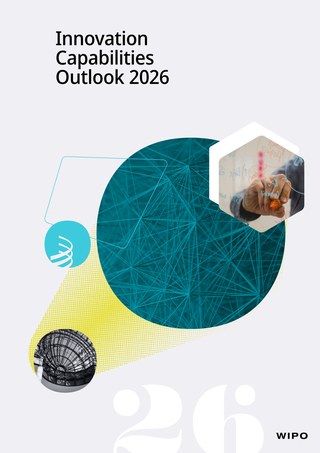
Innovation Capabilities Outlook 2026 Cover
Innovation Capabilities Outlook 2026
World Intellectual Property Organization (institutional author)
WIPO, Geneva, 2026
Member of the research team
The first edition of WIPO's flagship report on innovation capabilities, mapping the scientific, technological, and productive capabilities of countries and their potential for diversification. The methodology behind the report is documented in the accompanying Technical Notes.
World Intellectual Property Organization (institutional author)
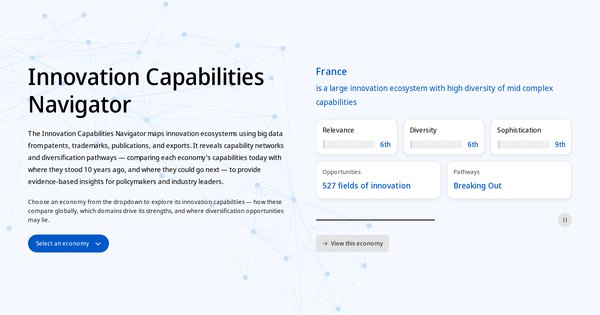
wipo.int/innovation-capabilities-navigator
Member of the research team
An interactive platform that lets users explore the scientific, technological, productive, and entrepreneurial capabilities of countries, based on publication, patent, trade and trademark data.
World Intellectual Property Organization (institutional author)
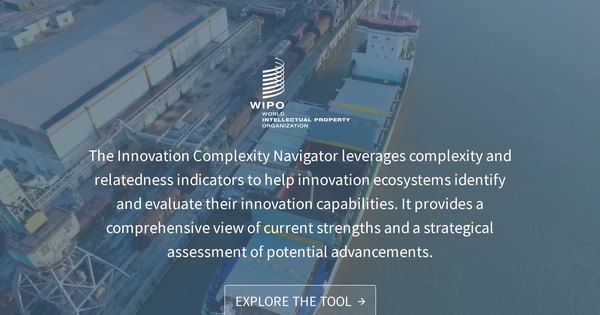
wipo.int/innovation-complexity-navigator
Member of the research team
An interactive platform built on complexity and relatedness indicators, helping innovation ecosystems assess their current strengths and identify feasible directions for diversification.

Research In Progress

Global Academic Collaborations in the Surge of AI for Research
with Andres F. Castro Torres (BSC)
Presented at ICSSI 2026
Does the adoption of AI in research democratize global collaboration networks, or does it reinforce existing inequalities? Using OpenAlex articles published between 1990 and 2024, we classify papers according to whether they rely on AI-based methods, on other methods, or on none, and we track how the geographic concentration of co-authorship evolves. We find that collaborations in AI-based research have become less concentrated globally, pointing to a potential democratizing force. Yet most collaborations still take place within a single country, so spatial inequalities may persist.
A Century of Faculty Globalization and University Rise: From US-Born, Foreign-Educated to Foreign-Born, US-Educated
with Frank Neffke (CSH)
Presented at NBER, CSH, GeoInno, DRUID, and ResPol
We examine the educational backgrounds and career trajectories of U.S. faculty from 1880 to 1990, to understand the reliance of U.S. universities on foreign-educated and foreign-born faculty. Our findings reveal that over a century, U.S. universities transitioned from relying U.S.-born, foreign-educated to foreign-born, U.S.-educated faculty.
The Geographic Content of Research: Stylized Facts on the Places That Get Studied
with Richard B. Freeman (Harvard), Ricardo Hausmann (Harvard), Vincent Larivière (Montreal), and Cassidy R. Sugimoto (Georgia Tech)
Presented at IEA-WC, Granada, Harvard, ICSSI, and Growth Lab
A paper describing stylized facts and listing potential research avenues for geographic content metrics. It extracts geographic content from titles and abstracts using NLP models.
Migration and Changes in Research Interest: A Life Cycle Analysis
with Richard B. Freeman (Harvard)
Presented at UNAL, PennState, Atl. Conf., Col. Conf, YSI, ICSS, IZA, WOEPSR, Bordeaux, Atl. Acad., Barcelona, WICK, Max Planck, RIE-MEIDE, Thessaloniki, and Harvard
We study how migration changes the geographic focus of research by Colombian scientists. We find that scientists who initially studied Colombia begin to study other countries after leaving Colombia.
Combining Minds to Decode Technological Recombination and Relatedness
with Ricardo Hausmann (Harvard), Shreyas Gadgin Matha (Harvard), Matte Hartog (Harvard), Muhammed A. Yildirim (Harvard), Federico Moscatelli (WIPO), and Julio Raffo (WIPO)
Presented at Growth Lab
We study how technologies combine in a single individual and in collectives of individuals and firms. We find that although a single individual combines a median of two technologies, and a country combines 155, both produce a similar number of technology-technology combinations. However, the strength and significance of these associations are highly heterogeneous.
Inequalities and Hierarchies in a Century of U.S. Faculty Hiring
with Frank Neffke (CSH)
Presented at ICSSI
We study the historical origins of current prestige hierarchies and patterns of inequality in US faculty hiring. We find that, since 1880, the supply (education) of US faculty has been highly concentrated in a few universities. Prestige hierarchies have remained persistent, even though the most prestigious universities in 1880 differ from those of today.
Cross-Domain Capabilities: Mapping the Links Between Science, Technology, and Production
with Ricardo Hausmann (Harvard), Shreyas Gadgin Matha (Harvard), Matte Hartog (Harvard), Muhammed A. Yildirim (Harvard), Federico Moscatelli (WIPO), and Julio Raffo (WIPO)
A paper proposing an empirical methodology to map the linkages between science, technology, and production capabilities. Our findings reveal that having strong scientific and production capabilities in cross-related domains predicts subsequent technological development.

Monographs/Theses

The Geography of Knowledge: Essays on Migration and Science
Ph.D. Thesis (University of Bordeaux, 2022)
Advisors: Ernest Miguelez and Valerio Sterzi
Committee: Cassidy Sugimoto (Georgia Tech), Ron Boschma (Utrecht), Megan MacGarvie (Boston Univ.), and Eric Rougier (Bordeaux)
Intermediarios en las exportaciones Colombianas
Title translation: Intermediaries in Colombian Exports
Bachelor's Thesis (Universidad del Valle, 2014)
Advisor: Boris Salazar Trujillo

Outreach

with Julian Prieto
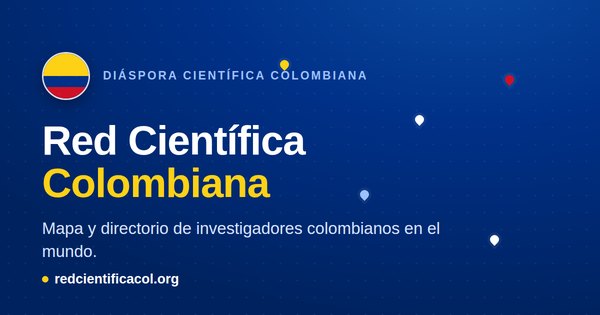
redcientificacol.org
Open-access platform, 2026
An open-access directory mapping Colombian researchers worldwide, combining an interactive map, ORCID-based profiles, and co-authorship networks. A volunteer initiative that reimplements an earlier project led by Julian Prieto, Mónica Medina, Ana Saborio, and Esmeralda Bermeo.